
The simplest lever with the biggest return.
When we start tracking how much protein someone is actually consuming per day—actually writing it down and looking at the numbers—they’re almost always under-consuming. It’s incredibly common. Years of diet culture, calorie restriction, and fear of eating “too much” have left people chronically underfed at the cellular level; they might be eating enough volume, but they’re not getting enough of the raw materials their bodies need.
I wrote about this observation in my post on mental health and metabolic health, because one of the most immediate effects of protein under-consumption is mood disruption. Low mood, brain fog, irritability—these can be hunger signals that don’t present as traditional hunger. The body doesn’t always tell you it’s starving through stomach growling; sometimes it tells you through a flat, gray feeling that settles on everything and doesn’t lift.
What I want to explore here is the broader picture—because protein under-consumption doesn’t just affect mood. It affects muscle preservation, metabolic rate, hormonal health, satiety signaling, bone density, immune function, and the body’s ability to heal and recover from virtually anything. It’s the most underrated lever I encounter in my clinical work, and for many of the people I serve, getting this one thing right unlocks progress that supplements and protocols couldn’t.
How We Got Here
The fear of protein—or more accurately, the fear of eating enough of anything—didn’t come from nowhere. It’s the product of decades of messaging that conflated health with restriction, confused eating less with eating better, and positioned food as something to be controlled rather than something to be nourished by.
For women in particular, the messaging has been relentless. Eat light. Eat small. Eat salads. Count calories. Fear the scale. The women who sit across from me—many of them the warriors I’ve written about, the ones who spent decades holding families together while putting their own needs last—have absorbed this messaging so deeply that eating a genuinely adequate meal feels wrong. It feels like too much. It feels indulgent, reckless, like they’re “letting go.”
What they’re actually doing, when they eat enough protein, is giving their bodies the building blocks to function. The frame has been so distorted by diet culture that nourishment feels like failure—and that distortion has real, measurable physiological consequences.
Men aren’t immune to this, though it manifests differently. The bodybuilding culture swung the pendulum in the other direction—hyper-focusing on protein at the expense of adequate dietary fat, which carries its own consequences. As I explored in my post on testosterone and lifestyle, a high-protein, low-fat diet (above 35% of calories from protein) can actually decrease testosterone. The protein-to-fat ratio matters; more isn’t always better. What I see most commonly in men, though, is the opposite of the bodybuilding pattern: guys who are eating on the go, skipping meals, and consuming nowhere near enough protein to support the demands they’re placing on their bodies.
What Happens When You Don’t Get Enough
Protein isn’t just about muscles, although that’s where most people’s understanding stops. Every cell in your body requires amino acids—the building blocks that protein provides—for maintenance, repair, and signaling. When protein intake is chronically insufficient, the body starts making choices about what to prioritize, and it doesn’t always choose what you’d want.
Muscle loss. The body will break down its own muscle tissue to access the amino acids it needs for more critical functions—immune defense, organ repair, enzyme production. This process is called catabolism, and it happens silently. You don’t feel your muscle mass declining; you just notice over months and years that you’re weaker, that your metabolism seems slower, that your body composition has shifted even though the scale hasn’t moved much. For women navigating perimenopause and menopause, this process accelerates—estrogen decline reduces the body’s ability to maintain lean mass, and inadequate protein intake compounds the loss at exactly the wrong time.
Metabolic rate decline. Muscle is metabolically expensive tissue—it burns calories at rest. As muscle mass declines from chronic protein insufficiency, resting metabolic rate drops. The body becomes more efficient at operating on fewer calories, which sounds adaptive until you realize it means fat loss becomes progressively harder. People in this state describe the feeling perfectly: “I keep eating less and less, and nothing changes.” They’re eating less because their metabolism has downshifted to match their intake—a protective mechanism that worked well during actual famines and works against them in a world of chronic under-eating.
Satiety disruption. Protein is the most satiating macronutrient. When protein intake is low, hunger signaling becomes unreliable—people feel hungry shortly after meals, experience cravings for high-calorie, quick-energy foods (sugar, refined carbs), and struggle to feel satisfied even when they’ve eaten what should be enough. This isn’t a willpower problem; it’s a signaling problem. The body is asking for something specific—amino acids—and when it doesn’t get them, it keeps sending the hunger signal in different ways.
Immune compromise. Antibodies are proteins. Immune cells require amino acids for replication and function. When protein is scarce, the immune system operates at reduced capacity—slower response times, less effective pathogen clearance, longer recovery from illness. The terrain that determines how well someone handles a cold or a virus is built in part on protein adequacy.
Mood and cognitive function. Neurotransmitters are built from amino acids. Serotonin comes from tryptophan. Dopamine comes from tyrosine. When the raw materials for neurotransmitter production are chronically insufficient, mood, motivation, focus, and emotional regulation all suffer. This is the mental health as metabolic health connection in its most direct form—the brain can’t build what it needs to function if the building blocks aren’t arriving.
Hair, skin, and nail deterioration. Collagen, keratin, and elastin are all proteins. When the body is protein-insufficient, these structural proteins are among the first things deprioritized. Thinning hair, brittle nails, skin that’s lost its elasticity—these are often attributed to aging or genetics when they’re actually signals of chronic under-nourishment.
Bone density. Bone isn’t just calcium; it’s a protein matrix embedded with minerals. Adequate protein is essential for maintaining bone density, and the research on this is clearer than many people realize—protein adequacy is a critical factor in maintaining bone density—research increasingly suggests it works alongside calcium as a key bone-building nutrient, not secondary to it. This matters enormously for women navigating menopause, when bone density is already under pressure from declining estrogen.
What “Enough” Actually Looks Like
This is where the practical rubber meets the road, and I want to be straightforward about it.
The RDA for protein—0.36 grams per pound of body weight—is the amount needed to prevent clinical deficiency. It’s the bare minimum required to keep you from developing a deficiency disease. It’s not the amount needed for optimal health, metabolic function, muscle preservation, or any of the goals most people are pursuing when they’re thinking about their nutrition.
In my experience working with private clients and clinic patients, the amount that seems to produce the best outcomes across metabolic health markers, body composition, mood, and energy is significantly higher—typically in the range of 0.7 to 1.0 grams per pound of body weight per day. For a 150-pound person, that’s 105 to 150 grams of protein daily.
When I tell people that number, the reaction is almost always the same: “That’s so much more than I’m eating.” And it is. Most people are somewhere between 40 and 70 grams per day—well above the deficiency threshold, well below the optimal range.
Getting from 50 grams to 120 grams feels like a dramatic increase, and it is an adjustment. What I observe consistently, though, is that once people make the shift—once they start eating protein at levels that actually match their body’s needs—the changes come fast. Energy stabilizes within days. Cravings quiet down. Brain fog lifts. The flat, gray mood that was masquerading as something psychological starts to brighten. Muscle starts to rebuild. Satiety becomes reliable for the first time in years.
These aren’t dramatic claims; they’re the boring, consistent outcomes of giving the body what it needs.
The Protein-to-Fat Balance
I want to address this because it’s a nuance that gets lost in the “eat more protein” message—and it matters, particularly for men.
As I detailed in my post on testosterone, research shows that high-protein, low-carbohydrate diets where protein exceeds roughly 35% of total calories can actually decrease testosterone. The mechanism is related to how the body allocates cholesterol—the precursor to all steroid hormones. When dietary fat is too low relative to protein, the raw materials for hormone production become insufficient.
This doesn’t mean protein is bad for hormones. It means the ratio matters. On a well-formulated ketogenic or carnivore approach, the balance typically falls into a range that supports both protein adequacy and hormonal health—adequate protein (enough to meet that 0.7–1.0 gram per pound target) alongside adequate dietary fat. The emphasis is on and, not instead of.
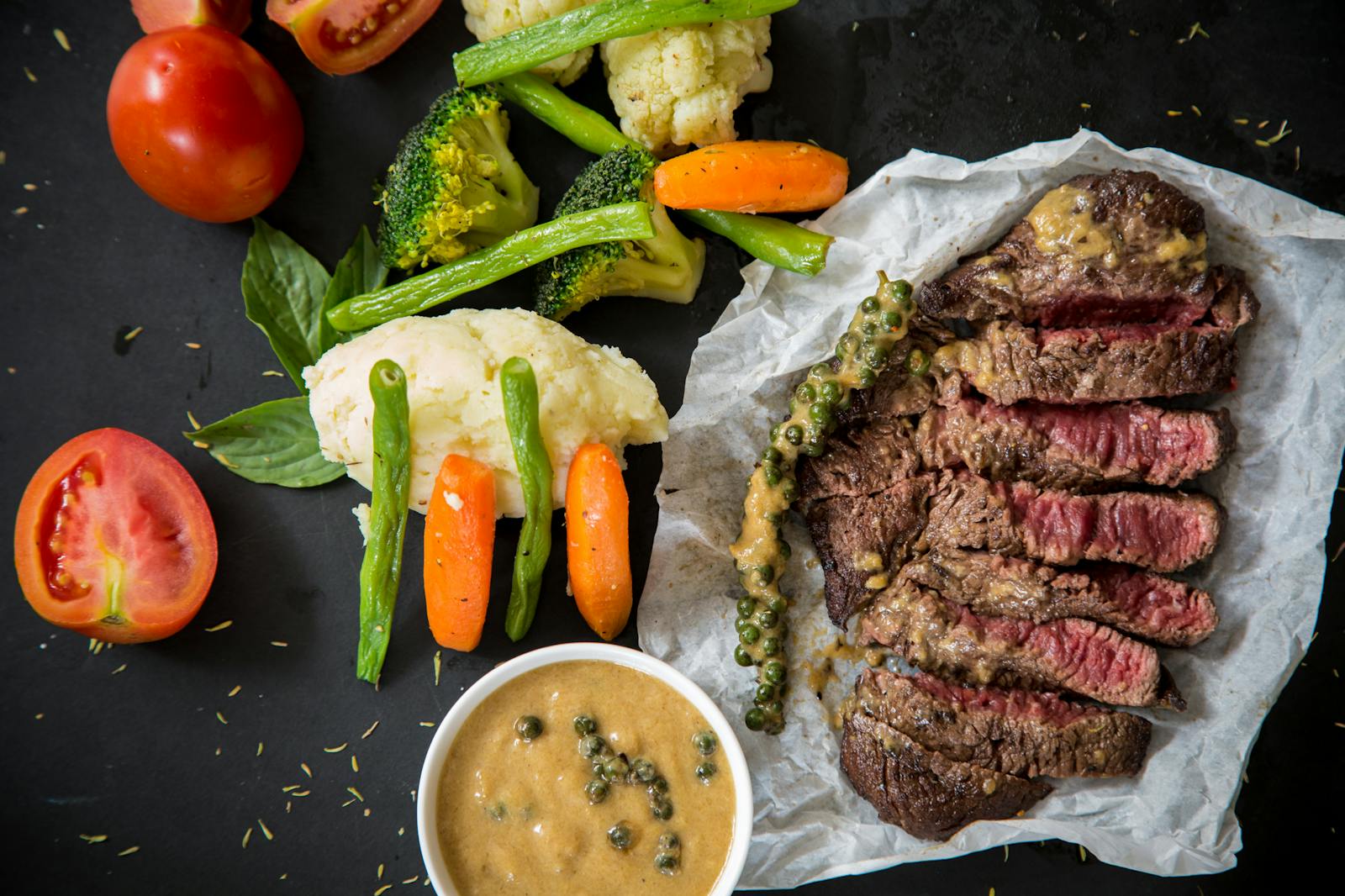
For most people, this means: don’t eat chicken breast all day. Eat the ribeye. Eat the eggs with the yolks. Eat the fatty cuts of meat that provide both the protein your body needs and the fat it requires for hormone synthesis, brain function, and cellular integrity.
The Healing Phase Connection
Protein adequacy takes on even greater importance during the healing phase of a dietary transition. When someone moves from a processed diet to keto or carnivore, the body enters a period of active repair—rebuilding gut lining, restoring hormone signaling, recalibrating neurotransmitter production, addressing years of accumulated damage.
All of that repair work requires raw materials, and the primary raw material is protein. This is why the healing phase demands nourishment over restriction—eating to satiety, prioritizing protein and fat, and resisting the diet culture instinct to cut calories in pursuit of faster weight loss. The body is doing construction, not demolition; it needs materials, not austerity.
I’ve seen the healing phase stall—sometimes for weeks—in people who were eating carnivore but not eating enough. They’d cut carbs, they’d removed the processed food, they’d done the hard part; they just weren’t eating sufficient volume of protein and fat to fuel the repair work the diet was supposed to enable. Once we got their intake up—sometimes significantly up—the stall broke.
A Note on the Stress Loop
Chronic protein under-consumption feeds directly into the stress loop I’ve written about extensively. When caloric intake is low—especially protein and fat—cortisol stays elevated because the body perceives scarcity. Elevated cortisol suppresses digestion, which impairs absorption, which deepens the nutritional deficit, which keeps cortisol elevated.
Many of the women who come to me in that stress loop pattern are the same women who’ve been eating salads and yogurt for decades. They’re under-eating protein by the most generous interpretation; by the clinical interpretation, they’ve been in a state of chronic protein insufficiency for years while being told they were “eating healthy.”
Eating enough protein—particularly in the morning, when cortisol is supposed to be high and then begin declining—sends a safety signal to the body. It says the famine is over. The resources are here. You can stop running on emergency reserves and start rebuilding.
It sounds too simple to be that impactful. In my experience, it’s one of the most impactful single changes a person can make.
Getting Practical
If you suspect you’re not eating enough protein—and statistically, you probably aren’t—here’s where I’d start:
Track it for one week. Not forever; just long enough to see where you actually land. Most people are genuinely surprised by how low their numbers are. Awareness alone shifts behavior.
Prioritize protein at every meal. Especially breakfast. If your morning is coffee and a granola bar—or nothing at all—that’s the first place to intervene. Eggs, ground beef, leftover steak from dinner; it doesn’t need to be complicated. The goal is getting amino acids into your system early in the day.
Choose whole, animal-based sources whenever possible. The bioavailability of protein from animal sources—meat, fish, eggs, dairy—is significantly higher than from plant sources. Gram for gram, your body extracts and utilizes more of the protein from a steak than from a bowl of beans. If you’re eating carnivore or keto, you’re already sourcing optimally; the question is usually quantity, not quality.
Don’t be afraid of the volume. 120 grams of protein looks like a lot of food when you’re used to eating light. It’s supposed to. You’re nourishing a body that’s been asking for more than it’s been getting. The adjustment period—where eating “that much” feels uncomfortable or excessive—is the diet culture conditioning pushing back. It passes.
Balance with adequate fat. Particularly if you’re a man concerned about hormonal health. Protein and fat are partners; prioritizing one at the expense of the other creates problems. Eat the fattier cuts. Don’t trim the fat off the steak. The body needs both.
The Simplest Lever
All that to say—protein might be the most straightforward, least complicated intervention in metabolic health. It doesn’t require a supplement stack, a genetic test, or a specialized protocol. It requires eating more of the most satiating, rebuilding, metabolically supportive macronutrient available—and for most people, it means eating significantly more of it than they currently are.
The body is remarkably responsive when you give it what it’s been asking for. Mood improves. Energy stabilizes. Muscle starts to rebuild. Cravings quiet. The foggy, flat, running-on-empty feeling that so many people have normalized starts to lift—sometimes within days of making the shift.
If you’ve been doing everything right and something still feels off, it might be worth asking a very simple question: am I actually eating enough?
I hope this serves as the next stepping stone in your own pursuit of knowledge—and maybe nudges someone toward the extra eggs at breakfast.
Rance Edwards is a National Board Certified Health and Wellness Coach (NBC-HWC) with over 2,000 clinical hours of experience, specializing in chronic disease management and lifestyle medicine.
If you’re wondering whether your protein intake is where it needs to be—or if you’re navigating a dietary transition and want to make sure the foundations are dialed in—I’d love to talk. Book a free discovery call—no pressure, just a conversation about where you are and what might help.
Sources
- Morton, R.W., et al. (2018). A systematic review, meta-analysis and meta-regression of the effect of protein supplementation on resistance training-induced gains in muscle mass and strength in healthy adults. British Journal of Sports Medicine, 52(6), 376–384. DOI: 10.1136/bjsports-2017-097608
- Whittaker, J., & Harris, M. (2022). Low-carbohydrate diets and men’s cortisol and testosterone: systematic review and meta-analysis. Nutrition and Health, 28(4), 543–554. DOI: 10.1177/02601060221083079
- Melby, C.L., et al. (2017). Attenuating the biologic drive for weight regain following weight loss: must what goes down always go back up? Nutrients, 9(5), 468. DOI: 10.3390/nu9050468
- Bonjour, J.P. (2011). Protein intake and bone health. International Journal for Vitamin and Nutrition Research, 81(2–3), 134–142. DOI: 10.1024/0300-9831/a000063
- Rizzoli, R., et al. (2018). Benefits and safety of dietary protein for bone health—an expert consensus paper. Osteoporosis International, 29, 1933–1948. DOI: 10.1007/s00198-018-4534-5