
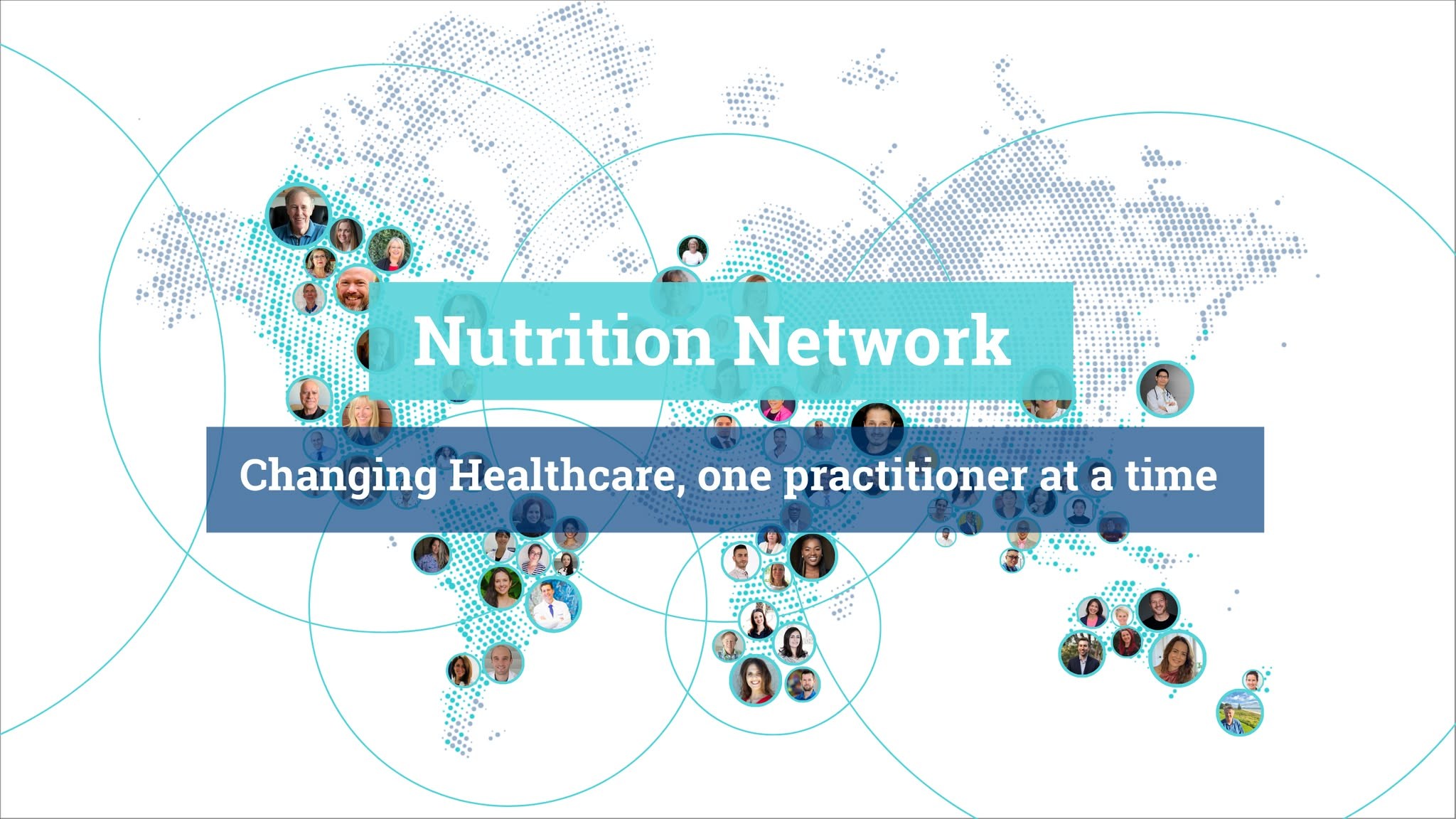
One of my first experiences with Nutrition Network was hearing Dr. Robert Cywes speak in a video on YouTube. I don’t remember exactly what he was talking about, but I remember the feeling: this is someone who’s teaching from clinical experience, not just theory. There was a groundedness to it that made me want to hear more.
That led me to their ketogenic textbook. I was thoroughly impressed—the depth was real, the evidence base was solid, and it was clearly written by people who’d spent time in the trenches with actual patients. That led me to take a handful of their courses, and at some point along the way I realized I loved Nutrition Network and the people behind it enough that I became an affiliate—which I want to be transparent about up front. I wouldn’t recommend something I didn’t genuinely believe in, and I wouldn’t have become an affiliate if the education hadn’t earned it.
What Nutrition Network Is
Nutrition Network is an evidence-based education platform focused on therapeutic carbohydrate restriction and metabolic health. They offer accredited online courses, a research directory, downloadable resources, a community platform for enrolled students, a practitioner directory, an advisor training track, and a textbook that I’d consider one of the best comprehensive references on ketogenic science available.
Their courses are designed primarily for healthcare professionals—doctors, nurses, dietitians, health coaches, and anyone working in a clinical or coaching capacity with people managing metabolic health conditions. The education is built on clinical experiences and taught by the professionals who’ve lived them, which is a distinction that matters more than it might sound.
What I Got Out of It
I’ve taken several of their courses covering cancer as a metabolic disease, women’s hormones—specifically around menopause—and the intersection of metabolism and mental health. I’m not going to do a course-by-course breakdown because I think the specific courses that matter most will vary depending on who you are and what you’re working with clinically. What I can share is what the education felt like from the inside.
The thing that stuck with me most is that I felt like I was getting truth and experience passed on to me instead of theory. That might sound like a small distinction, but it’s not. A lot of continuing education in the health space—and I’ve done plenty of it—reads like it was written by someone who synthesized research papers. Nutrition Network’s courses read like they were written by someone who’s sat across from thousands of patients and is sharing what they’ve actually seen work. The clinical context is woven into everything.
The courses reinforced some things I already knew from my own practice, challenged a few assumptions I’d been carrying, and gave me frameworks I’ve since used with private clients and clinic patients. The menopause material was particularly valuable—it filled in gaps in my understanding of how hormonal transitions interact with dietary interventions in ways that I wasn’t getting from other sources.
How It Compares
People sometimes ask me how Nutrition Network compares to my other certifications, and the honest answer is that I can’t really compare them—they’re each special in their own ways.
The Primal Health Coach Institute was foundational for me in the realm of whole food eating and health coaching philosophy. It’s where I built my understanding of ancestral health principles and learned how to hold space for someone’s health journey as a coach. PHCI shaped who I am as a practitioner at the most fundamental level.
Brendan Vermeire’s Functional Mental Health Practitioner program is one of those deeply advanced courses that digs into how you think and helps you build a new lens. It changed the way I see the connection between metabolic health and mental health, and it’s still shaping my clinical thinking every day.
Nutrition Network occupies a different space. It’s excellent education built on clinical experiences, covering a broad variety of topics, all leaning on the experiences of the professionals teaching the courses. Where PHCI gave me the coaching foundation and FMHP gave me the mental health lens, Nutrition Network gave me clinical depth across specific metabolic health topics that I can apply directly to the people I serve.
They’re complementary, not competitive. Each one made me a better practitioner in ways the others couldn’t.
Who Should Look at This
I think anyone in the health space who’s working to support others in improving their health would benefit from Nutrition Network’s education. The quality is consistently high, the evidence base is solid, and the clinical grounding makes the material immediately applicable.
That said, I think Nutrition Network is especially well-equipped to bring doctors and other healthcare professionals up to speed on metabolic health and help them update their understanding of nutrition science. If you’re a physician who’s starting to question the standard dietary guidelines, or a nurse practitioner who’s seeing patients reverse chronic disease through carbohydrate restriction and wants to understand the science more deeply, this is where I’d point you first.
For health coaches, the courses add clinical depth that complements your coaching certification. You’re also going to find coaching principles woven into the clinical courses, and they offer advisor training for practitioners who want to build that skillset. It’s not a coaching certification program, but the education absolutely touches on how to work with people—not just what to tell them. You’re going to learn the metabolic science at a level that makes your coaching more informed, more confident, and more effective.
The Textbook (Keep It Within Arm’s Reach)
I want to mention their ketogenic textbook separately because it deserves its own callout. “Ketogenic: The Science of Therapeutic Carbohydrate Restriction in Human Health” is one of the most comprehensive references I’ve encountered on this topic. If you’re the kind of person who wants to understand the full depth of the science—not a popular summary, not a blog post, but the actual clinical and biochemical framework—this book delivers.
I keep mine within arm’s reach. It’s a reference I come back to regularly.
The Bottom Line
Nutrition Network is doing something that I think is critically important for the future of metabolic health: they’re building the education infrastructure that practitioners need to feel confident working in this space. The gap between “I’ve heard keto might help” and “I understand the clinical science well enough to guide someone through it responsibly” is massive—and Nutrition Network is one of the best bridges across that gap that I’ve found.
If you want to explore their courses, you can find their full directory at nutrition-network.org. That’s an affiliate link—I became an affiliate because I believe in what they’re doing, not the other way around.
As always, I hope sharing my experience with education platforms like this helps another coach, clinician, or self-healer find the resources they need. The learning never stops; it shouldn’t.
Photo courtesy of Nutrition Network
Rance Edwards is a National Board Certified Health and Wellness Coach (NBC-HWC) with over 2,000 clinical hours of experience, specializing in chronic disease management and lifestyle medicine.
Looking for a metabolic health coach who invests in continuing education and applies it in practice? Book a free discovery call—no pressure, just a conversation about where you are and what might help.