
The intervention that doesn’t come in a bottle.
I spend most of my working hours thinking about food, supplements, lab values, and clinical patterns. That’s the world I operate in, and it’s where I believe a lot of the most impactful levers live. I wouldn’t do this work if I didn’t believe that deeply.
There’s a lever I’ve been sitting with for a while now, though, that doesn’t fit neatly into any of those categories—and the more clients I work with, the more convinced I become that it might be one of the most important ones of all.
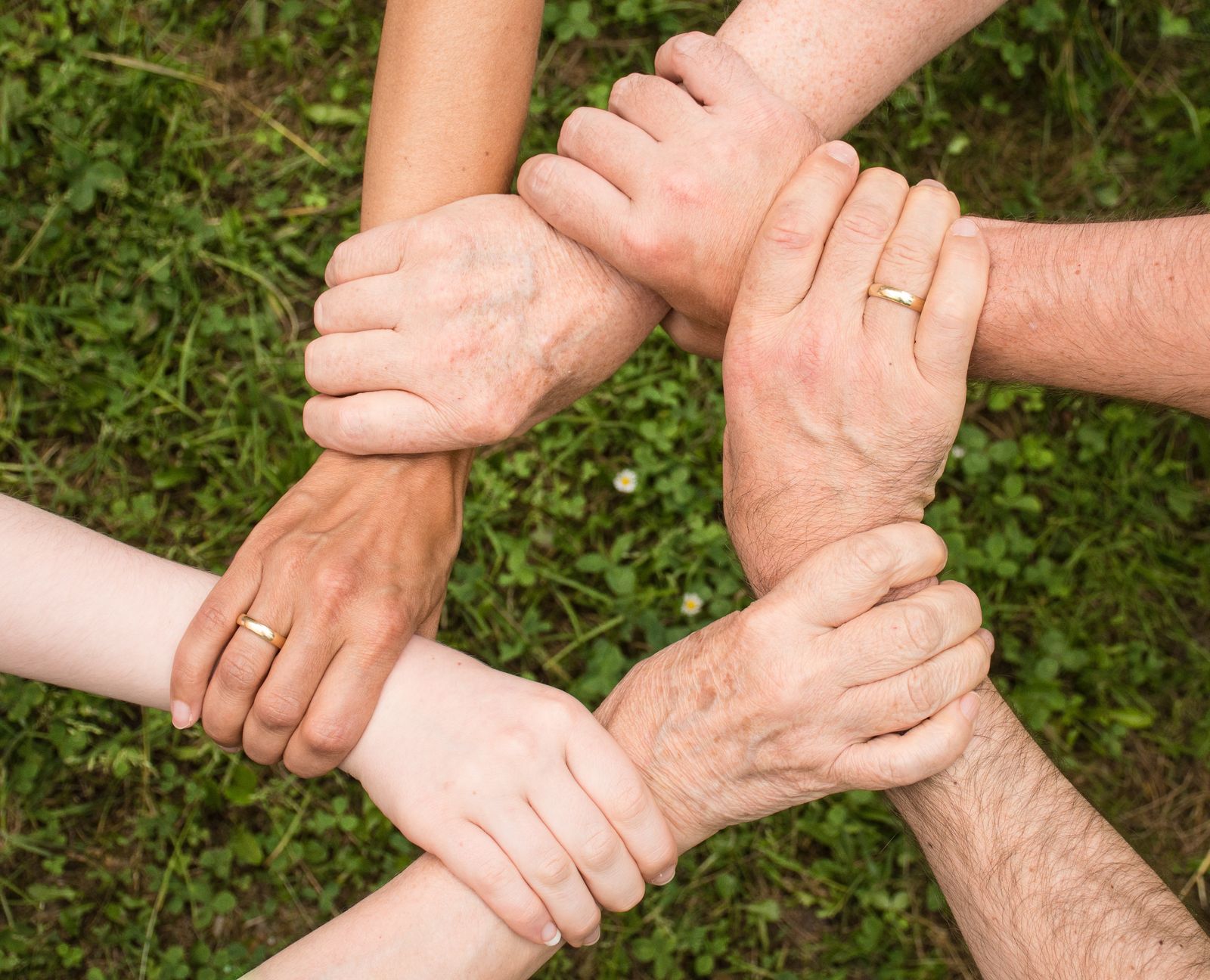
It’s connection. Real, genuine human connection. The kind where someone knows you, sees you, and you don’t have to perform or pretend. The kind that makes you feel like you belong somewhere.
I know this sounds like the sort of thing you’d see on a motivational poster in a corporate break room, and I get why it might be tempting to scroll past it. We’re trained to look for clinical interventions with measurable outcomes—specific supplements at specific doses, macronutrient ratios calibrated to individual needs, lab values tracked over time. Those things matter, and I’m not diminishing any of them.
What I’ve observed, though, is that clients who have strong social support consistently do better than clients who don’t—even when the dietary and supplement protocols are identical. There’s something happening in the space between people that moves the needle in ways I can’t fully explain with a mechanism diagram, and I think ignoring it because it’s hard to quantify is a mistake.
What the Research Keeps Showing
The data on social isolation and health outcomes is staggering enough that it’s hard to dismiss, even for the most mechanistically-minded among us.
Research consistently shows that chronic loneliness and social isolation are associated with a risk of premature death comparable to smoking 15 cigarettes a day. That’s not a casual comparison—it places social disconnection in the same risk category as one of the most well-established health hazards in modern life.
Social isolation has been associated with increased rates of cardiovascular disease, elevated inflammatory markers, immune dysfunction, cognitive decline, depression, and—the one that catches my attention most given my clinical focus—metabolic dysfunction. Cortisol stays chronically elevated in people who are socially isolated; the body interprets disconnection as a form of threat. When cortisol stays elevated, everything downstream is affected—sleep, digestion, blood sugar regulation, hormonal signaling, immune function. It’s the same stress loop I see in my hard-charging clients, just arriving through a different door.
What’s particularly important to recognize is that loneliness and social isolation are not the same thing. A person can be surrounded by people and still feel profoundly lonely. A person can live alone and feel deeply connected. Loneliness is the subjective experience of disconnection—the feeling that nobody truly knows you or that you don’t belong. That subjective experience is what the research most closely ties to health outcomes.
What I See in Practice
In my work with private clients and clinic patients, the connection between social support and outcomes shows up in ways that are hard to ignore.
The clients who have someone in their corner—a partner who supports their dietary changes, a friend who does the work alongside them, a community that understands what they’re doing—tend to navigate the hard parts of a protocol with more resilience. They’re more likely to push through the adaptation period. They’re more likely to ask for help when something isn’t working. They’re more likely to stay with the process long enough to see results.
The clients who are doing this entirely alone—whose families think keto is extreme, whose friends don’t understand why they’ve stopped eating bread, whose doctors have concerns they can’t quite articulate—carry a different kind of weight. The dietary and clinical work is the same; the emotional infrastructure supporting it is completely different.
I see this acutely with the women I’ve described as warriors—the ones who spent decades being the glue for everyone else while their own support system quietly eroded. They’re the caregivers, the organizers, the ones who hold families together. By the time they sit across from me, many of them don’t have anyone holding space for them. The isolation isn’t always dramatic or obvious; sometimes it’s just the slow accumulation of years where nobody asked them how they were doing—really doing—and they stopped expecting anyone to.
That’s not a nutrition problem, but it affects nutrition outcomes. That’s not a supplement deficiency, but it compounds every other deficiency. The body doesn’t distinguish between physiological stress and the stress of being unseen; it just tallies the total load.
The Metabolic Health Community Paradox
There’s an irony worth naming here: many of the people pursuing metabolic health through ketogenic or carnivore protocols are doing something that, by its nature, can be isolating.
These dietary approaches are still niche enough that choosing them often means swimming against the current of your social environment. Family meals become complicated. Restaurant outings require explanation. Office lunch culture turns into a daily navigation exercise. The person who’s experiencing genuine health improvements is simultaneously experiencing social friction—and for some people, the friction is enough to erode the benefits.
I’ve seen clients who achieved remarkable clinical results—blood sugar normalized, inflammation resolved, energy transformed—and still felt unhappy, because the dietary shift that improved their health also distanced them from the social rituals that kept them connected.
This is where community fills a gap that no supplement can touch. Finding people who understand what you’re doing, why you’re doing it, and what it’s costing you socially—that belonging isn’t a luxury. It’s a health lever. It changes the experience from “I’m doing something weird that nobody understands” to “I’m part of a community that gets it.” That shift in framing changes cortisol levels, adherence rates, and long-term outcomes in ways that are real even if they’re hard to put numbers on.
Beyond Diet—Connection as a Foundation
I listed relationships and social connection as a foundation in my post on the modern environment, and I didn’t do it casually. The more I sit with it, the more I think we’ve made a categorical error by treating connection as a nice-to-have rather than a biological requirement.
Humans evolved in small, tightly-knit groups. For hundreds of thousands of years, being part of a group wasn’t optional—it was survival. The nervous system is wired to interpret social connection as safety and social isolation as danger. When the body perceives isolation, it responds the same way it responds to any sustained threat: cortisol up, inflammation up, immune surveillance shifted toward reactivity, recovery and repair deprioritized.
We can eat perfectly, supplement precisely, sleep optimally, and manage our light exposure down to the minute—and if we’re doing all of that in a state of chronic disconnection, the body is still operating in a threat environment. The foundations aren’t complete.
I’m not saying connection is a substitute for the other foundations—it obviously isn’t. You can’t belong your way out of insulin resistance caused by a processed food diet. What I’m saying is that connection is a multiplier that makes everything else work better, and its absence is a drag that makes everything else work harder.
What This Actually Looks Like
I want to be practical about this, because “connect more” is about as useful as “eat healthy” without specifics.
Shared pursuit. Some of the strongest health communities form around a shared practice—a gym, a walking group, a cooking class, an online forum built around a dietary approach. The connection is built into the doing, which makes it sustainable in a way that “let’s get together sometime” rarely is.
Vulnerability. Real connection requires letting people see you—not just the curated version. In my experience, the clients who open up about their struggles—to a coach, to a support group, to a partner—tend to feel less isolated even before their circumstances change. Being known is therapeutic in a way that being managed isn’t.
Proximity. Digital communities have value—I’m not dismissing them. What I’ve noticed, though, is that in-person connection seems to carry a different physiological weight. Something about being physically present with another human, sharing a meal, making eye contact, occupying the same space—it registers differently in the nervous system than a text exchange or a forum post. When possible, local connection matters.
Holding space. This one goes both directions. Finding people who hold space for you is important; being someone who holds space for others is equally important. The act of showing up for someone else—listening without fixing, being present without performing—strengthens the connection for both people. It’s not a one-way transaction; it’s a loop.
The Underrated Lever
All that to say—I think we’ve collectively underestimated how much our connections with other people affect our health. Not in a vague, feel-good way, but in a measurable, physiological way that shows up in inflammatory markers, cortisol patterns, immune function, and metabolic regulation.
This isn’t a replacement for the clinical work. It’s the context that the clinical work happens inside. When that context is one of connection, support, and belonging, the clinical work tends to produce better outcomes. When that context is one of isolation, pressure, and disconnection, even the best protocol has to fight harder to move the needle.
If you’re doing everything “right” and still feeling stuck, it might be worth asking not just what you’re eating and how you’re sleeping, but who’s in your corner. Who knows what you’re going through. Who you can be honest with about how hard this is sometimes.
The answer to that question might matter more than the next supplement on your list.
I hope this connects some dots—and maybe nudges someone toward reaching out, showing up, or simply letting someone in. The body keeps score of connection the same way it keeps score of everything else.
Rance Edwards is a National Board Certified Health and Wellness Coach (NBC-HWC) with over 2,000 clinical hours of experience, specializing in chronic disease management and lifestyle medicine.
If you’re looking for someone to walk alongside you—not just hand you a protocol but actually partner with you through the hard parts—that’s what coaching was designed for. Book a free discovery call—no pressure, just a conversation about where you are and what might help.
Sources
- Holt-Lunstad, J., Smith, T.B., & Layton, J.B. (2010). Social relationships and mortality risk: a meta-analytic review. PLoS Medicine, 7(7), e1000316. DOI: 10.1371/journal.pmed.1000316
- Holt-Lunstad, J., et al. (2015). Loneliness and social isolation as risk factors for mortality: a meta-analytic review. Perspectives on Psychological Science, 10(2), 227–237. DOI: 10.1177/1745691614568352